Pros
- Best visual Instagram grid planner in the category (drag-and-drop feed preview)
- Linkin.bio converts Instagram traffic into website clicks effectively
- Clean, intuitive interface that requires almost no learning curve
- Media library with labels organizes visual assets for reuse
- Supports Instagram, Facebook, TikTok, Pinterest, LinkedIn, YouTube
- Hashtag suggestions and saved hashtag groups save time on Instagram posts
- 14-day free trial on all paid plans
Cons
- Starter plan limits to 30 posts per month ($0.83 per post at $25/mo)
- No longer supports X (Twitter) scheduling
- Free plan is too restricted to use as a real working tier
- Growth plan at $50/mo needed for 2 brands and basic team features
- Analytics are basic compared to Hootsuite, Sprout Social, or Iconosquare
- No social listening, no ad management, no competitor tracking
- Customer support reviews cite slow responses and billing friction
- Price increased while the free plan effectively disappeared
The honest version of this Later review is one sentence: Later has the best Instagram grid planner in the category, and almost nothing else justifies its pricing. At $25 per month, the Starter plan limits you to 30 scheduled posts. That is $0.83 per post. Buffer charges $5 per channel for unlimited scheduling. If visual Instagram feed planning is critical to your business, Later earns the premium. If scheduling posts is the job, Later is 5 to 10 times more expensive than tools that do it equally well.
Starting Price: $25/mo Starter ($18.75 annual) | Free Plan: Limited (not a working tier) | Free Trial: 14 days
What Later Does Better Than Anything Else
Later’s visual grid planner lets you arrange your upcoming Instagram posts in a preview of your profile feed before they go live. You drag and drop images into the grid, rearrange them to ensure color schemes and content types alternate attractively, and see exactly how your profile will look to visitors. For brands where the Instagram feed is a portfolio, a lookbook, or a brand statement, this visual planning tool is genuinely unmatched. No other social media management tool provides this level of feed preview quality.
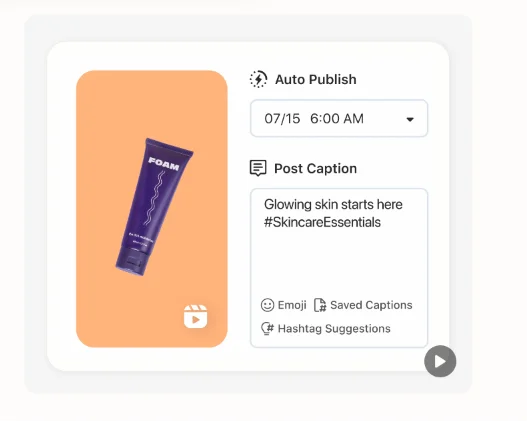
Linkin.bio is Later’s other standout feature. It transforms your Instagram bio link into a mini landing page that mirrors your feed, where each post links to a specific URL. Followers tap a post and land on the corresponding product page, blog post, or landing page. For businesses driving Instagram traffic to conversions, Linkin.bio bypasses Instagram’s one-link limitation more elegantly than generic link-tree alternatives. According to Later’s published data, businesses using Linkin.bio see measurably higher click-through rates from Instagram than standard bio link tools.
The 30-Post Ceiling: Where Value Falls Apart
Starter at $25 per month ($18.75 annual) includes 1 social set (one profile per platform), 1 user, and 30 posts per month. Thirty posts is one post per day with no room for Instagram Stories, Reels, or multi-platform content. A brand posting one Instagram feed post, one Story, and one TikTok per day exhausts the cap in 10 days.
To put the value in perspective: 30 posts at $25 per month equals $0.83 per scheduled post. Buffer Essentials at $5 per channel offers unlimited scheduling. A brand managing 5 channels on Buffer pays $25 total and schedules unlimited posts. The same brand on Later Starter pays $25 and schedules 30 posts total. The per-post value gap is the core problem with Later’s pricing in 2026.
Growth at $50 per month ($37.50 annual) doubles to 2 social sets and 3 users with 150 posts per month. Scale at $110 per month ($82.50 annual) expands to 6 social sets and 6 users. The post caps loosen at higher tiers, but the entry pricing positions Later as a premium tool for what is increasingly a commodity service (scheduling posts).
The Platform Gaps That Matter
Later no longer supports X (Twitter) scheduling. According to G2 reviews, this is attributed to X’s API restrictions that prevent third-party scheduling, though Buffer and Hootsuite still manage partial X support. For brands that need to schedule across all major platforms including X, Later cannot serve as a single tool.
Later supports Instagram, Facebook, TikTok, Pinterest, LinkedIn, and YouTube. Its Instagram and TikTok support is strong. Its LinkedIn and YouTube support is functional but less developed. Later was built for visual platforms and performs best on Instagram and Pinterest where visual feed planning adds genuine value. On text-heavy platforms like LinkedIn, Later’s visual-first approach provides no advantage over cheaper schedulers.
Analytics: Adequate but Not a Selling Point
Later provides engagement metrics, best-time-to-post recommendations, audience demographics, and post-performance tracking. The analytics are adequate for solo creators and small teams tracking basic growth. They do not compete with Hootsuite’s competitive benchmarking, Sprout Social’s cross-channel reporting, or Iconosquare’s dedicated Instagram analytics depth.
For teams that need analytics to justify social media ROI to leadership, Later’s reporting is too basic. For solo creators who need to know which posts performed best and when to post, the analytics cover the core needs without going deeper.
Who Should Pay for Later
Instagram-first brands where feed aesthetics drive purchasing decisions: fashion, food, photography, interior design, beauty, and lifestyle brands. These businesses get genuine value from the grid planner because a cohesive feed directly affects follower perception and buying behavior. The visual planning tool saves these teams the trial-and-error of posting and hoping the feed looks good.
Businesses that rely heavily on Instagram-to-website traffic via Linkin.bio. If a meaningful percentage of your website conversions originate from Instagram, Linkin.bio’s post-level linking provides more granular conversion tracking than generic link-in-bio tools.
Who Should Choose Buffer or SocialBee Instead
Everyone whose primary need is scheduling posts across multiple platforms. Buffer at $5 per channel with unlimited scheduling covers the same core job at a fraction of Later’s cost. SocialBee at $29 per month adds content categories, AI captions, and recycling features that Later does not offer. For the direct pricing breakdown, see our Hootsuite vs Buffer comparison.
Teams managing 3-plus platforms where Instagram is one channel among many. Later’s value concentrates on Instagram. If you manage Instagram, LinkedIn, TikTok, and Facebook equally, a platform-agnostic scheduler provides better value than paying Later’s premium for Instagram-specific features you use on one of four channels.
Budget-conscious creators who post more than once per day. The 30-post Starter cap means a twice-daily poster runs out in 15 days. Buffer’s free plan (3 channels, 10 posts per channel) serves light posters at $0. Buffer Essentials at $5 per channel serves heavier posters with unlimited scheduling.
Last updated: July 11, 2026
Frequently Asked Questions
How much does Later cost in 2026?
Later Starter costs $25 per month ($18.75 annual) for 1 social set, 1 user, and 30 posts per month. Growth costs $50 ($37.50 annual) for 2 social sets and 3 users. Scale costs $110 ($82.50 annual) for 6 social sets and 6 users. The free plan is too limited for production use. A 14-day free trial is available on all paid plans.
Does Later have a free plan?
Later offers a limited free plan with restricted posts per month and basic features. It is not a viable working tier for any active social media presence. Buffer’s free plan (3 channels, 10 scheduled posts per channel, unlimited access) is significantly more usable as a permanent free option. Later’s free tier functions as a preview of the paid product rather than a standalone tool.
Is Later worth it for Instagram?
Later is worth it specifically for Instagram-first brands where visual feed cohesion drives business results (fashion, food, photography, design, beauty). The grid planner and Linkin.bio are genuinely the best in the category for Instagram. If Instagram is one channel among several and you do not need visual feed planning, cheaper tools like Buffer deliver the same scheduling functionality.
Does Later support X (Twitter)?
No. Later no longer supports X scheduling. This is attributed to X’s API restrictions. Buffer and Hootsuite still offer partial X support. For brands that need to schedule across all major platforms including X, Later cannot serve as a single social media management tool.
Is Later or Buffer better?
Buffer is better for value: unlimited scheduling at $5 per channel with a free plan. Later is better for Instagram visual planning: the grid preview and Linkin.bio are unmatched. If your primary need is scheduling posts efficiently, Buffer wins on cost. If your primary need is maintaining a cohesive Instagram aesthetic, Later wins on capability. See our Hootsuite vs Buffer comparison for the broader social media tool landscape.
What is a social set in Later?
A social set is one profile per platform grouped together. If you have an Instagram, Facebook, and TikTok for one brand, that is 1 social set. Managing two brands requires 2 social sets. Starter includes 1 set, Growth includes 2, Scale includes 6. Each additional set beyond your plan requires an add-on purchase.
Related Social Media Guides
Later has the best visual Instagram grid planner in social media management. If maintaining a cohesive Instagram aesthetic is central to your brand, no other tool matches Later's drag-and-drop feed preview. The Linkin.bio feature genuinely drives traffic from Instagram to your website. Beyond that, the value proposition collapses. Starter at $25 per month caps you at 30 scheduled posts, which is one post per day and no room for stories or multi-platform content. Buffer delivers unlimited scheduling for $5 per channel. SocialBee covers scheduling plus AI captions for $29 per month across more platforms. Later is worth it for Instagram-first creators and brands where visual feed cohesion drives purchasing decisions. For everyone else, cheaper tools do the core scheduling job equally well without the post cap.